
Find APA Journalist

Generic selectors
Exact matches only
Search in title
Search in content
Post Type Selectors
post
page
acf-post-type
team
Filter by Categories
Articles
News and Events
Uncategorized

Recent Articles

Russia launched ecocide in Ukraine

Russia has launched an ecocide in Ukraine since the full-scale invasion – destroying forests and wild animals, digging trenches in the forest near Chornobyl, pushing dolphins to extinction in the Black Sea, burning down the Kinburn Spit, drowning Khahovka Zoo animals and fauna in adjacent natural parks, polluting vast territories with ammunition and mines, and, finally, blowing up the Kakhovka reservoir.

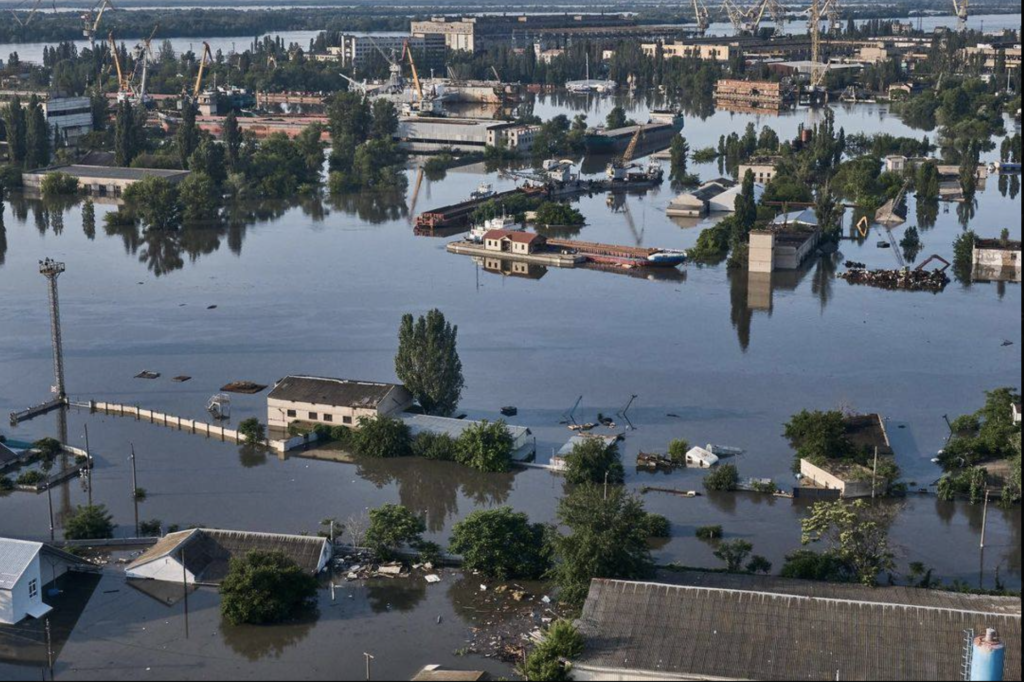
Destruction of the Kakhovka hydro-electric power plant is an environmental catastrophe.

Today, is the peak of water flooding from the Kakhovska reservoir. In 2 to 4 days it will cease to exist.

These are some of the aftereffects of this terrorist act on environment. We will know more when the water subsides.

As President Volodymyr Zelensky said earlier, it’s not only human life under threat from the flooding in southern Ukraine – but also the welfare of animals.

  • Nyzhnodniprovskyy natural park has been destroyed.
  • 80,000 hectares of land from Nova Kakhovka to Dniprovsko-Buhskyi Lyman have been flooded.
  • The entire biocenosis (thickets, floodplain, aquatic vegetation) downstream of the Dnieper has been flooded. In the natural areas of Kherson and Mykolaiv regions (Park “Beloberezhye Svyatoslav”, 352 km² of land), the population of hundreds of species of animals and plants are at risk to be lost. 70 species of animals and 30 types of plants from the IUCN Red List of Threatened Species are in danger.
  • Sea pollution: dozens of tons of toxic sludge (including 450 tons of machine oil that got into Dnipro river). Thousands of tons of fish will die. The consequences will be felt by the western Black Sea coast (Ukrainian Odesa, Romania, Bulgaria, Turkey).
  • If the reservoir is completely drained, toxic deposits will be exposed (heavy metals, oil products, pesticides, radionuclides). Wind will carry this toxic dust into the air, mainly in the direction of Crimea.
  • About 1,5 million hectares of land will not be suitable for crops/farming in Kherson and Zaporizhzhia regions due to irrigation problems.
  • The North-Crimean canal drying out will lead to problems with drinking water in Crimea and will be critical for agriculture on the peninsula.
  • Water from the Dnipro river might become toxic at some point due to explosives used and toxic elements and garbage getting into water. It’s dangerous to approach the river because of sporadic mine detonation.
  • The river has also been contaminated with 150 tonnes of industrial lubricant, said President Volodymyr Zelensky, and another 300 tonnes was at risk of leaking.
  • Ukraine’s agriculture ministry said 10,000 hectares of agricultural land on the Ukrainian-controlled side of the Dnipro had been flooded, and several times more on the Russian-occupied.

    At the same time, some 94% of irrigation systems for agriculture in Kherson region were now without a water source, the ministry added.

  • There are concerns about desertification, with agricultural land washed away by flood waters and the negative consequences of the flooding likely to be felt for years.
  • UN humanitarian aid chief Martin Griffiths is warning of grave and far-reaching consequences for thousands of people in the affected Kherson region.